
REALMENTE…
MUY INTERESANTE
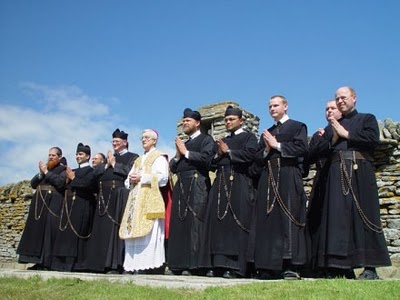
El sitio Catholic Herald publicó una entrevista de Mark Greaves al Superior de los Padre Redentoristas.
Los dichos del Padre Michael Mary son tan interesantes que llamaron la atención del sitio Summorum Pontificum (http://www.summorum-pontificum.fr), que publicó un artículo sobre ellas; el cual, a su vez, fue retomado por el importante sitio francés TradiNwes (http://tradinews.blogspot.com/).
Parece, pues, que es muy importante.
En efecto, lo dicho deja muchas enseñanzas. Leamos con atención:
«En el sitio del Catholic Herald, se puede leer un artículo muy interesante. Quien suscribe el artículo, Mark Greaves, visitó a los célebres Redentoristas Trasalpinos para comprender su historia y su reconciliación con Roma. Habló con el padre Michael Mary, fundador de esta comunidad en 1988. La reconciliación de esta comunidad con Roma debe ponerse directamente en el balance del Motu Proprio Summorum Pontificum, ya que sirvió como un desencadenante para un proceso de reflexión.
El padre Michael Mary declara que al principio no tenía la intención de reconciliarse con Roma porque creía que el Vaticano estaba en el error. Pero en una Conferencia de Monseñor Fellay, escuchó a este hablar de una posible gestión ante Roma para obtener la jurisdicción para los matrimonios, cuestión canónica particularmente delicada.
Sin embargo, hasta ahora, la Fraternidad San Pío X, según él, afirmaba tener las competencias necesarias. Por lo tanto, ¿por qué solicitar un permiso para un poder que ya tiene?
Debe señalarse que en su artículo Mark Greaves precisa que Monseñor Fellay niega haber hecho tal declaración.
Lo concreto es que, a partir de este momento, el padre Michael Mary quiso comprender mejor su posición canónica. Después de un intento fallido ante los dominicos franceses – ¿cuáles? –,
se dirigió al Padre Joseph Bisig, de la Fraternidad San Pedro.
La continuación de los acontecimientos fue un viaje a Roma, el levantamiento de las sanciones y la aceptación por parte de Roma de las constituciones basada en las constituciones de la antiguos Redentoristas de 1921 y 1936.
Por lo tanto, ¿todo va como en el mejor de los mundos?
¡No!, por supuesto
En primer lugar, la Comunidad está dividida, algunos Padres Hermanos se fueron, llevándose con ellos parte del apostolado. La mayoría de los laicos en vínculo con la Comunidad hasta ese momento ha roto contactos. Los suscriptores de la publicación pasaron de 4 000 a 2 000.
Pero, más aún: esperan del Obispo, del cual dependen, la erección de su Comunidad; y el Obispo dice que espera la opinión de la Congregación de los religiosos.
Según Mark Greaves, la Comunidad manifiesta fe y alegría, a pesar de las pruebas de la espera y del abandono, incluso de muy duras críticas de parte de antiguos amigos. Dos Hermanos deberían ser ordenados. Una Comunidad que se reconcilió con Roma, un Obispo que demora una decisión.
Un buen ejemplo del balance del Motu Proprio.
Mucho se ha hecho, otras cosas todavía tienen que hacerse.
Mucho depende de los Obispos.
Nuestros países necesitan Obispos Summorum Pontificum.»
Comentario de Radio Cristiandad:
Summorum Pontificum quiere llevar agua a su molino y por eso dice que «la reconciliación de los Redentoristas con Roma debe ponerse directamente en el balance del Motu Proprio Summorum Pontificum, ya que sirvió como un desencadenante para un proceso de reflexión.»
Esto no es exacto. El artículo de Mark Greaves deja bien en claro que hasta la conferencia de Monseñor Fellay el padre Michael Mary no tenía la más mínima intención de reconciliarse con Roma. Esto no era necesario, porque creía que el Vaticano estaba en el error.
El desencadenante del proceso de mentalización fue la conferencia de Monseñor Fellay… ¡Una más, entre tantas!
En la disertación escuchó hablar de una posible gestión de Monseñor Fellay ante Roma para obtener la jurisdicción para los matrimonios.
Esto es muy grave. En Radio Cristiandad ya se ha tratado este tema. ( «¿Por qué no se habla de lo imperioso?» (click aquí); «Validez de los matrimonios» (click aquí); «A modo de respuesta al Padre Bouchacourt» (click aquí))
Lamentablemente, ni Catholic Herald, ni Summorum Pontificum, ni TradiNwes dan la referencia de la conferencia del prelado suizo. Es muy importante tener ese detalle, porque Monseñor Fellay, ¡una vez más!, niega haber hecho tal declaración.
Lo concreto es que el padre Michael Mary fue a Roma, y a eso siguió el levantamiento de las sanciones y la regularización de la Comunidad…
¿Regularización? ¡Claro!, se trata de «la preciada regularización que solamente Roma tiene la autoridad de otorgar», como dice Monseñor Williamson…
Lo que siguió a la «preciada regularización» es más de lo mismo: una Comunidad hasta ese momento unida, fuerte, pujante, ahora dividida, el apostolado mermado, los fieles apartados… y ¡la Iglesia Conciliar que se burla de todos ellos!
Realmente, como dice Summorum Pontificum, pero en otro sentido: Un buen ejemplo del balance del Motu Proprio.
Nuestros países necesitan Obispos verdaderamente católicos…, incluso al interior mismo de la Tradición…
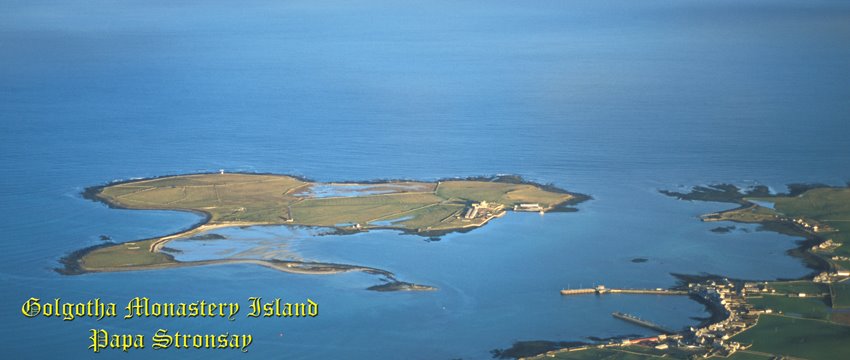
Siga el artículo original en inglés y francés:
Pope Benedict XVI’s 2007 Motu Proprio, Summorum Pontificum, was an attempt to end decades of division over liturgy: to bring the Society of St Pius X (SSPX), and all the groups affiliated with it, back into the Church. The older Latin Mass, the Pope said, had never been outlawed; it was, in fact, the «same rite» as the newer Mass, the Novus Ordo. The Church must make «every effort» to achieve unity, he said, adding: «Let us generously open our hearts and make room for everything that the faith itself allows.»
Negotiations with the SSPX have indeed begun, yet so far no traditionalist group has taken up the Pope’s call – except, that is, for one small community based on a tiny, windswept island in Orkney.
The community, known as the Transalpine Redemptorists, have paid a heavy price for their decision. Four brothers and two priests have left, and about 1,000 supporters in Britain have broken off contact with them – only one or two families are still in touch. They have not been ecstatically welcomed, either. It is more than two years since they first approached Rome, yet they are still waiting for their bishop, Bishop Peter Moran of Aberdeen, to grant them legal status within the Church.
Fr Michael Mary, who founded the community in 1988, is a kind man but no softie. Later, when he gives me a rosary as a present, he says «don’t blub». He is a New Zealander: he left in 1987 to join Archbishop Marcel Lefebvre at his Econe seminary in Switzerland. When I arrive at their island, Papa Stronsay, the waters are calm. A seal is bobbing its head by the shore. I sit down with Fr Michael Mary in the monastery guestroom – he tells me it was once a herring shed, where women used to gut fresh herring. Next door is the chapel, where office is now sung in Latin for several hours a day.
When Summorum Pontificum came out, he says, he was back in New Zealand. He read it first on the Rorate Caeli website – the «BBC of tradition». Later he printed a copy for another priest, Fr Anthony Mary.
They had no thoughts, at that time, of becoming reconciled with Rome. It was only months later, at an SSPX conference, that doubts about their status began to creep in.
It started when Bishop Bernard Fellay, head of the SSPX, mentioned that he would ask Rome to give the SSPX jurisdiction for marriages. Currently, their marriages could be automatically annulled by the Church if the couple wanted a divorce; that, clearly, was a problem. The remark made Fr Michael Mary wonder, though: if the SSPX has «supplied jurisdiction», as it has always claimed, why does it need to ask Rome? (Bishop Fellay later claimed that he did not make this remark.)
Several weeks later, on New Year’s Eve, 2007, Fr Michael Mary went to bed early. As he was going to sleep, he was struck by a very strong feeling. It was, he says, a «complete turnaround». He got out of bed and wrote these words on an envelope: «I, Fr Michael Mary, believe tonight that Pope Benedict XVI is the true Pope of the Catholic Church, and that I must now do everything possible to live in union with him.»
Fr Michael Mary rustles his rosary beads loudly as he talks. Occasionally, when trying to remember something, he takes off his glasses and holds them in the air, his eyes directed at the ceiling.
He says he was eager, then, to resolve the question of jurisdiction. It boils down to whether the SSPX founder, Archbishop Marcel Lefebvre, was right to claim «a state of necessity» that meant he could ordain bishops without permission from the Pope.
First, he contacted French Dominicans. These, he says, were the experts: they had huge libraries and produced dense periodicals. But when he asked them about jurisdiction, expecting them to have a treatise on it, they said they had nothing of the sort. He mimics their response to his question: a very knowing, drawn out, «Ah, bon…» They told him that to ask that question would be «the revolution» in his community.
After that he got in touch with Fr Josef Bisig, founder of the Priestly Fraternity of St Peter (FSSP), who broke from the SSPX in 1988. Fr Bisig said he would email over the FSSP study, and wrote: «Excuse me for saying my personal opinion, but I think you probably are schismatic.»
Reading the FSSP document, says Fr Michael Mary, was depressing. «I thought, ‘this is bad news’. We are actually in a difficult situation.»
He printed off the study for each member of the community, and suggested they read it three times, letting it filter through. They reached the conclusion that they should seek communion with Rome «at all costs». In March 2008, they had a vote. Each member put a bead in a voting box: a white bead for «yes», a black bead for «no». All the beads were white.
Without Summorum Pontificum, says Fr Michael Mary, they «would not have dreamed» of becoming reconciled with Rome. They were struck by the graciousness, and courage, of the Pope, and by his admission that the old Mass had never been outlawed. «Because nearly everybody would tell you it had,» he says.
At first they kept their vote a secret. After all, they did not know who to tell. Their contact with the mainstream Catholic Church had, for 20 years, been «zero or negative».
On the advice of Fr Bisig, they arranged a meeting with Fr José Monteiro Guimarães, a Redemptorist official in the Congregation for Clergy (he is now Bishop of Garanhuns in Brazil). They travelled to Rome, staying in a hotel. It was, he says, very daunting. «We had the feeling that we should go back, that we had made a big mistake. We were completely out of our camp.»
In the months that followed they met officials at Ecclesia Dei, the body set up to negotiate with the SSPX. They met its prefect, Cardinal Dario Castrillon Hoyos. Their priestly suspensions were lifted. Later they wrote a constitution, lifting parts of old Redemptorist constitutions from 1921 and 1936. That has been approved. All that is needed now is for Bishop Moran, their local bishop, to issue a «decree of erection» that will put them in canonical good order. (Last Friday Bishop Moran issued a statement which said he was waiting for guidance from the Congregation for Religious, to whom the matter has now been passed.)
The process, though, has not been smooth. Some in the community have family who are in the SSPX. Four Brothers left, two without saying a word to Fr Michael Mary. One priest, based on the next-door island of Stronsay, split off immediately, taking most of the parish with him. Another, Fr Clement, left more recently, for a traditionalist parish in Melbourne. «Nobody expected it to take this long,» says Fr Michael Mary.
Subscriptions to their monthly newspaper dropped by half, from 4,000 to fewer than 2,000. They received hate mail from people they thought were friends. They had to withdraw seminarians from an SSPX seminary in Australia after the rector told them they would never be ordained unless they defied Fr Michael Mary and started their own breakaway group. Fr Michael Mary is hurt by all of this. «When you leave the ghetto, the stones don’t come from the front, they come from behind you. If they can get you in the back with a good boulder – that’s how it felt.»
Despite all these hardships, the community has a joyful feel to it. At recreation there are roars of laughter. One brother, who wears Doc Martens along with his habit, has an apron that says: «Danger: Men Cooking.»
They are also very young – in their 20s and 30s, mainly. Two brothers are about to be ordained as priests; four more are seminarians. In total there are 15 in the community.
It is not an easy life here: in winter there are only six hours of sunlight, and the winds are ferocious — sometimes up to 120mph. «If you are small and frail,» says one brother, «you stay inside.»
Brother Jean-Marie, 32, and Brother Yousef-Marie, 35, are both from warmer climes. «When you first come here,» says Brother Jean-Marie, from India, «you feel like there’s ice on your face.»
Brother Jean-Marie was a student when he felt called to the religious life, but the orders he knew did not really impress him. He then came across a small leaflet about the Transalpine Redemptorists. «People were actually wearing their habits, they were not ashamed of it. I thought, this is something I feel inspired to give my life to.»
It attracted him partly because it offered what he describes as a masculine kind of Christianity. «You’re not just sitting on your thumbs. You’re mixing cement, slaughtering cows, handling boats and ropes. In monastic history, monks always did work, they built the monastery themselves. They didn’t have people to do it for them.»
Brother Jean-Marie and Brother Yousef-Marie, from Sydney, have an intensity about them. They have both just finished their studies and, once the community is canonically erected, they can be ordained. Right now they are in limbo. «It is not a pleasant feeling,» says Brother Jean-Marie. «But ultimately God is in charge.»
Artículo en francés:
Fuente:
Sur le site du Catholic Herald, un article très intéressant est en lecture. Le signataire de l’article, Mark Greaves, a rendu visite aux célèbres Rédemptoristes transalpins pour comprendre leur histoire et leur réconciliation avec Rome. Il s’est entretenu avec le Father Michael Mary, fondateur de cette communauté en 1988.
La réconciliation de cette communauté avec Rome est à mettre directement au bilan du Motu Proprio Summorum Pontificum, puisque celui-ci a servi de déclencheur à un processus de réflexion.
Father Mary déclare qu’il n’avait pas l’intention de se réconcilier avec Rome au départ puisqu’il estimait que le Vatican était dans l’erreur. Mais lors d’une conférence de Mgr Fellay, il a entendu celui-ci parler d’une éventuelle démarche auprès de Rome pour obtenir la juridiction concernant les mariages, question canonique particulièrement délicate. Or, jusqu’ici, la Fraternité Saint-Pie X affirmait, selon lui, avoir les compétences nécessaires. De ce fait, pourquoi demander une autorisation pour un pouvoir que l’on a déjà. Notons que dans son article, Mark Greaves précise que Mgr Fellay nie avoir fait une telle déclaration. Toujours est-il qu’à partir de ce moment, le Father Michael Mary a voulu cerner au mieux leur position canonique. Après une tentative infructueuse auprès de dominicains français – lesquels ? – il s’est tourné vers l’abbé Joseph Bisig de la Fraternité Saint-Pierre. La suite des événements, ce fut un voyage à Rome, la levée des sanctions, l’acceptation par Rome des constitutions s’appuyant sur les anciennes constitutions rédemptoristes de 1921 et 1936.
Tout va donc pour le mieux dans le meilleur des mondes ?
Non, bien sûr !
D’abord, la communauté s’est divisée, des Pères et des Frères sont partis, emportant avec eux les apostolats. Une majorité des laïcs en lien avec la communauté jusqu’ici a rompu les contacts. Les abonnés à leur publication sont passés de 4 000 à 2 000.
Mais, plus encore, ils attendent de l’évêque, dont ils dépendent, l’érection de leur communauté, lequel évêque dit attendre l’avis de la Congrégation des religieux. Selon Mark Greaves, la communauté fait preuve de foi et de joie, malgré les épreuves de l’attente et de l’abandon, voire des critiques très dures venues des anciens amis. Deux frères devraient être ordonnés.
Une communauté réconciliée avec Rome ; un évêque qui traîne à prendre une décision. Un bon exemple du bilan du Motu Proprio. Beaucoup de choses ont été faites, d’autres restent encore à faire. Beaucoup dépendent des évêques. Nos pays ont besoin d’évêques Summorum Pontificum.

Buen día, quisiera saber cuál es el artículo en donde se trató la jurisdicción de los Matrimonios celebrados por la FSSPX.
En Cristo.-
No necesito ver para creer, si el río suena es porque agua trae!!!
Que nos puede asombrar? Que M Fellay lo haya dicho? Y luego negado? Qué problema hay?
A esto nos tiene ya acostunbrados, al menos a cambiar textos,o quitar parte de los documentos….mada es nuevo najo el sol!!!
Por sus frutos los conoceréis
Salve Maria..!
No al acuerdismo, no al entreguismo, no a la capitulacion… ¿que hubiera hecho Mons Lefebvre?… mejor me pregunto por lo que hizo: resistir, transmitir lo que recibio: morir como catolico.
Estos 40 años de la FSSPX no merecen celebrarse con sospechas de traicion.
Un abrazo in Jesu et Maria,
El pseudo fundador de esa comunidad, era un loco iluminado, vetado por su comunidad en Nueva Zelanda, donde hizo sus votos perpetuos; supuestamente se asqueó de Juan Pablo II dando la comunión en la mano, por eso se alineó al lado bizantino de su congregación; mientras tanto sus superiores lo mandaron a una clínica mental y luego a un monasterio cisterciense para que reflexionara.
De ahí se escapó porque «en un sueño» vio que la verdad estaba con Mons. Lefebvre. Ahora nos cuenta que en otro «sueño» se le reveló que Ratzinger es el verdadero Papa. Ahora echa pestes de la Fraternidad, pero lo bueno es que todos echamos pestes de él. Todos los que pasamos por esa isla, damos testimonio de que está completamente loco. De redentoristas no tienen nada; solo el hábito ahora mutilado con capa de pasionista y escapulario sabe de qué cosa. De las Reglas y Constituciones de Nuestro Padre San Alfonso, no obedece más que lo que le conviene, haciendo sus dispensas en lo que no le agrada (jugar deportes, tocar instrumentos). Se hacen llamar monjes, cuando los redentoristas ni lo fueron ni lo son. Su monasterio en Papa Stronsay no responde a la idea de un monasterio redentorista (básicamente una residencia en medio de la ciudad o en las afueras), sino a una laura camaldulense. Papa Stronsay es un collage de monasticismo oriental y cenobitismo occidental: nada que ver con la C.SS.R
El Vaticano es sabio para querer vetarlo, antes que aprobarlo hay que ver si está bien de la cabeza. No es racional y eso es lo que les extraña allá, decir que a la mitad de una noche, después de haberse inventado eso de la conferencia de Monseñor Fellay y de haber invocado a los dominicos de Avrillé, que tuvo una «convicción interna» que lo despertó al grado que dijo que Ratzinger es el Papa y que debía reconocerlo. Pues, ¿no supuestamente ya lo reconocía, como de hecho lo hace la fraternidad? ¿No lo reconocía acaso, en la primera página de su periódico ‘Catholic’, casi casi como declaración de fe?
Dios proteja a las mentes incautas que Gregory Sim manipula en Papa Stronsay, que el Vaticano tan cuidadoso como es ahora de los casos de suciedad clerical, revise también lo que Papa Stronsay y en especial su casita de retiro de Stackaback tienen que decir al respecto.
Laudetur!